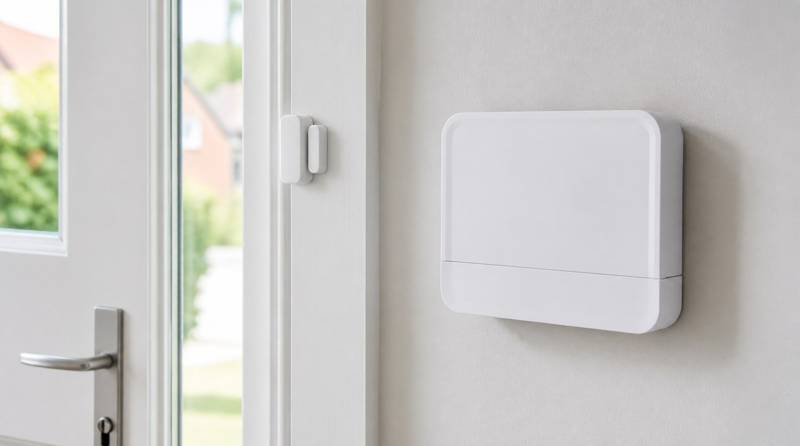
Burglar alarms range from a £100 DIY kit that goes up in an afternoon to a fully wired, professionally monitored system costing well over £1,000, and the right choice depends more on the property and how it will be used than on chasing the cheapest option.
This guide sets out real 2026 UK prices across the main types of system, what monitoring actually adds, and what genuinely affects the final cost.
Burglar Alarm Cost by System Type
The type of system is the single biggest factor in price, and each option suits a different balance of budget, property size and how much hands-off reassurance is wanted.
| System Type | Typical Cost |
|---|---|
| DIY smart alarm kit (self-installed) | £100 to £300 |
| Wireless system, professionally installed | £300 to £700 |
| Wired system, professionally installed | £500 to £1,200 |
| Wired system with 24/7 monitoring set up | £600 to £1,500 |
| Large property, multiple zones, cameras added | £1,200 to £2,500+ |
DIY kits typically include a hub, a handful of door and window sensors, and a motion detector, expandable later with extra sensors bought separately. Professionally installed systems include a site survey, sensor placement advice and a workmanship guarantee as standard.
Monthly Monitoring Costs
Monitoring is an optional add-on that connects the alarm to a response centre or a keyholder network rather than relying on the siren alone to alert someone nearby.
- Self-monitored (app alerts only): Usually free or a small annual fee, £0 to £60 a year, since alerts go straight to a phone app rather than a monitoring centre.
- Professionally monitored, no keyholder response: £15 to £25 a month, covering alert verification and police notification where appropriate.
- Fully monitored with keyholder or guard response: £25 to £35 a month, including a dispatched response if an alarm cannot be verified remotely.
Monitoring contracts typically run 12 to 36 months, so it is worth checking the minimum term and any early cancellation charge before signing up.
Does It Reduce Home Insurance?
Many UK insurers offer a discount for a professionally installed and monitored alarm, though the size of the saving and the certification required vary by provider.
- NSI Gold or SSAIB certification: The two main UK accreditation bodies for alarm installers; most insurers that offer a discount require one of these rather than an uncertified DIY kit.
- Typical discount: Usually 2% to 5% off the buildings or contents premium, sometimes more for higher-value contents cover.
- DIY kits: Rarely qualify for a discount on their own, though some insurers now recognise specific smart-alarm brands separately from traditional installer-certified systems.
It is worth checking directly with the insurer before choosing a system if the discount is a genuine factor, since the qualifying criteria differ between providers.
What Affects the Cost
- Number of doors and windows: Each additional entry point needing a sensor adds to both the kit cost and installation time.
- Wired vs wireless: Wired systems cost more to install, especially in an older property where cabling has to be run discreetly, but need no battery changes.
- Property size: A larger house needs more sensors and sometimes a repeater to keep wireless signal reliable across every zone.
- Extras: Cameras, a video doorbell, smart locks or a panic button integrated into the same system all add to the total.
- Monitoring level: Self-monitored costs nothing ongoing; professionally monitored with response adds the most to the lifetime cost.
DIY or Professional Installation?
A DIY smart alarm covers most standard homes well and is far cheaper upfront, but a professionally installed system typically includes a proper site survey, tamper-proof sensors, hard-wired backup power and a workmanship guarantee, which matters more for larger or higher-risk properties. If a certification such as NSI or SSAIB is needed for an insurance discount, professional installation is the only route, since DIY kits are not eligible for that accreditation. For a property already undergoing other work, it is worth reading alongside our guide to house rewiring costs, since running alarm cabling at the same time as other electrical work is usually cheaper than a standalone visit.
Ways to Reduce the Cost
- Start with a DIY kit and expand later. Most smart systems let extra sensors be added over time rather than buying full coverage upfront.
- Get at least three quotes for professional installation. Pricing varies significantly by region and installer for like-for-like systems.
- Ask about insurer-approved brands. Some insurers offer a discount for specific certified smart-alarm brands without requiring full NSI or SSAIB installation.
- Bundle with other security work. Combining an alarm with new locks, external lighting or a camera installation in one visit often reduces the callout cost.
- Check the monitoring contract term first. A shorter initial term costs slightly more per month but avoids being locked into a system that no longer suits.
Burglar alarms cost £100 to £2,500+ depending on the system, with most standard homes landing between £300 and £1,200 for a decent professionally installed setup. Monitoring, if wanted, adds £15 to £35 a month. Check insurer certification requirements before choosing a system if a premium discount matters.