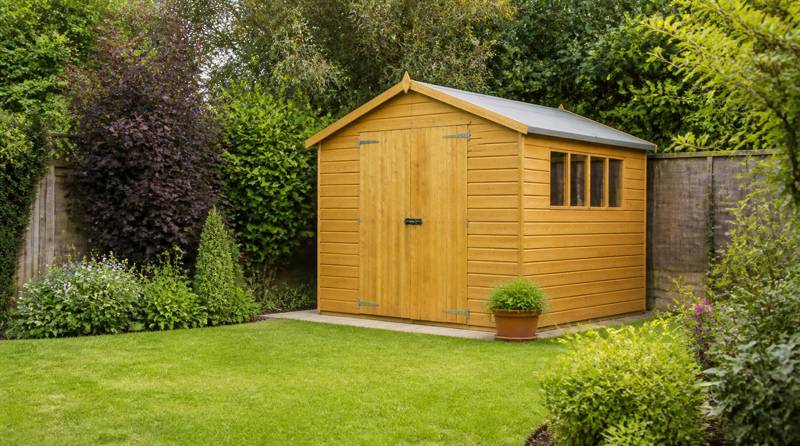
A garden shed is one of the cheapest ways to add real storage or workspace to a garden, and the range in price is enormous, from a flat-pack basic model to a fully lined, powered workshop-grade building. Size and material drive most of the cost, but the base and delivery are easy to forget when budgeting.
This guide sets out real 2026 UK prices by size and material, what a base costs, and what actually pushes the price up or down.
Garden Shed Cost by Size and Material
Size is the single biggest factor, followed closely by material, since timber, metal and plastic sit at genuinely different price points for a like-for-like footprint.
| Shed Type | Typical Cost |
|---|---|
| Small timber shed, up to 6x4ft | £300 to £700 |
| Metal shed, similar size | £200 to £500 |
| Mid-size timber shed, 8x6ft | £700 to £1,500 |
| Plastic/resin shed, mid-size | £500 to £1,200 |
| Large or premium timber shed, 10x8ft+ | £1,500 to £3,000 |
| Heavy-duty workshop-grade shed, insulated | £2,500 to £5,000+ |
These prices are for the shed structure itself; a base, delivery and any installation labour are usually separate costs on top, covered below.
Base and Installation Costs
Skipping a proper base is one of the most common mistakes, since a shed sitting directly on soil or grass will trap damp and rot far faster regardless of material quality.
- Concrete slab base, supplied and laid: £150 to £400 for a standard-size shed base.
- Paving slab base: £100 to £300, a slightly cheaper alternative if ground is already reasonably level.
- Plastic shed base kit, DIY: £60 to £150, suitable for smaller sheds on already-level ground.
- Delivery: £30 to £100 depending on distance and shed size, sometimes included free over a certain order value.
- Professional assembly, if not self-assembling: £150 to £400 depending on shed size and complexity.
Do I Need Planning Permission?
Most garden sheds fall under permitted development rules and do not need formal planning permission.
- Behind the building line: The shed must sit behind the front wall of the house facing the road.
- Garden coverage limit: All outbuildings combined must cover no more than 50% of the garden area.
- Height near boundaries: Maximum 2.5 metres high if within 2 metres of any boundary, otherwise up to 4 metres for a dual-pitched roof.
- Listed buildings and conservation areas: Stricter rules apply, and it is worth checking with the local council before ordering.
Timber, Metal or Plastic?
Each material suits a different priority, and the right choice depends more on maintenance tolerance than on upfront budget alone.
- Timber: Best looks and slightly better insulation, but needs re-treating with preservative every 1 to 2 years to avoid rot, typically £15 to £40 in materials per treatment.
- Metal: Cheapest option, needs no ongoing treatment and fully resists rot, but can suffer condensation issues and is noisier in heavy rain.
- Plastic/resin: Needs no maintenance at all and is immune to both rot and rust, but generally offers less structural strength for hanging heavy tools or shelving.
A shed used as a genuine workshop rather than pure storage is worth reading alongside our guide to electrician costs if running power out to it, since a certified electrician is required for any outdoor circuit.
How Long Does a Shed Last?
Lifespan varies significantly by material and how well it is maintained. A well-maintained timber shed, treated every 1 to 2 years, typically lasts 15 to 25 years. A metal shed usually lasts 10 to 20 years before rust becomes a genuine problem, and a good quality plastic or resin shed can last 20 years or more since it is immune to rot and rust entirely.
Ways to Reduce the Cost
- Self-assemble a flat-pack model. Most sheds arrive as a kit and can be built in a weekend, saving the £150 to £400 professional assembly cost.
- Buy end-of-season. Garden centres and DIY chains often discount sheds significantly in autumn once summer demand drops.
- Choose metal or plastic for pure storage. If looks are not the priority, these materials avoid ongoing treatment costs entirely over the shed's lifetime.
- Lay a DIY plastic base kit. Suitable for smaller sheds on already-level ground and avoids the cost of a professionally laid concrete or paving base.
- Buy only the size actually needed. Oversizing is a common and expensive mistake; measuring exactly what needs storing first avoids paying for unused space.
Garden sheds cost £200 to £5,000+ depending on size and material, with most typical storage sheds landing between £300 and £1,500. A proper base adds £100 to £400, and self-assembly saves £150 to £400 in labour. Check permitted development rules before ordering if the shed is large or close to a boundary.