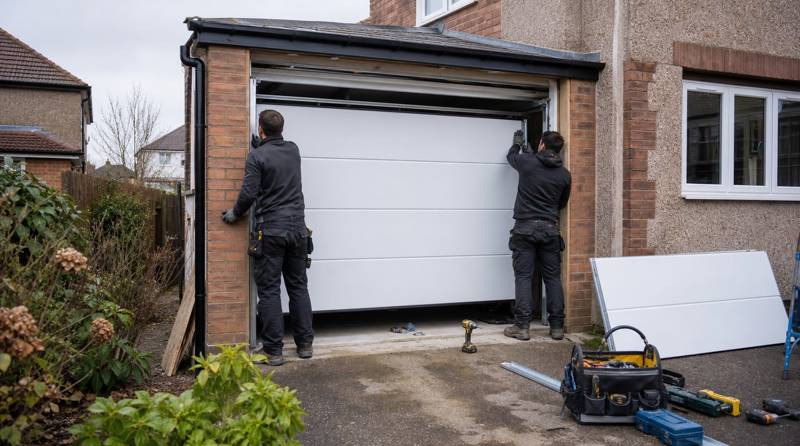
A garage door is one of the biggest visible elements of a house front, and the price gap between a basic manual up-and-over and a fully automated insulated sectional door is huge. Type is the main driver of cost, but whether it comes electric, insulated and pre-hung all move the price considerably.
This guide covers real 2026 UK prices by door type, electric conversion, insulation and what fitting typically adds.
Garage Door Cost by Type
Type is the single biggest factor, since the mechanism (swinging out, rolling up, folding into sections) changes both the manufacturing cost and how much space it needs in front of the garage.
| Door Type | Typical Cost (Supplied) |
|---|---|
| Basic steel up-and-over | £250 to £600 |
| Retractable (canopy) up-and-over | £350 to £800 |
| Roller door, steel | £700 to £1,400 |
| Roller door, insulated aluminium | £1,200 to £2,000 |
| Sectional door, steel | £600 to £1,200 |
| Sectional door, insulated/timber-effect | £1,200 to £1,800 |
| Side-hinged timber door | £500 to £1,500 |
These are supply-only prices; fitting is usually a separate cost, covered below.
Fitting and Electric Conversion
Most garage doors are sold supply-only or supply-and-fit, and going electric adds a further cost whether done at purchase or retrofitted later.
- Professional fitting, supply-only door: £150 to £400 depending on door type and whether the old frame needs replacing too.
- Electric door, bought pre-wired and fitted: £800 to £2,500 total, including motor, remote controls and safety sensors.
- Retrofit motor kit on an existing manual door: £250 to £600 plus £100 to £200 fitting labour, cheaper than replacing the whole door.
- Smart control add-on (app/voice control): £50 to £150 on top of a standard electric motor.
- New frame, if the old one is rotten or the wrong size: £150 to £400 extra.
Which Type Is Best?
The right choice depends more on the garage's layout and driveway space than on budget alone.
- Sectional: Opens vertically without swinging out, good insulation, suits most modern driveways. Costs more than basic up-and-over.
- Roller: Most compact, good for garages with limited headroom or a short driveway close to the road.
- Up-and-over: Cheapest option, but swings outward on the canopy type or needs a fully clear approach on the retractable type.
- Side-hinged: Suits period properties or a garage used as a workshop needing regular pedestrian access without opening the full door.
A garage being converted for extra living space rather than a car is a different project entirely; see our guide to garage conversion costs if that is the plan instead of a straight door swap.
Insulation
An uninsulated steel door loses heat fast, which matters if the garage is attached to the house or used as a workshop.
- Factory-insulated door, bought new: Adds £100 to £400 to the base door cost depending on type.
- DIY retrofit insulation kit on an existing steel door: £40 to £100 in materials, a more modest improvement than a factory-insulated door.
- Insulated frame and weather seals: £50 to £150 extra, worth doing alongside an insulated door to stop draughts around the edges.
Do I Need Planning Permission?
Replacing a garage door on a standard house does not usually need planning permission, since it counts as permitted development in most cases. Listed buildings, some conservation areas, and garages already converted into habitable rooms may have different rules, so it is worth a quick council check first if the property falls into any of those categories.
How Long Does a Garage Door Last?
A steel up-and-over or sectional door typically lasts 15 to 25 years with basic maintenance such as lubricating hinges and rollers annually. Timber doors need more upkeep, repainting or re-staining every 3 to 5 years, and can last 20 to 30 years if properly maintained, while the electric motor on an automated door typically needs replacing after 10 to 15 years regardless of the door itself.
Ways to Reduce the Cost
- Choose a basic up-and-over if space allows. The cheapest option by a clear margin, and perfectly serviceable if the driveway has clear space in front.
- Retrofit an electric motor instead of buying pre-wired. Cheaper than a fully electric door and can often be added later once budget allows.
- Buy end-of-line or ex-display models. Some suppliers discount doors from discontinued colour ranges significantly.
- Keep the existing frame if it is sound. Avoids £150 to £400 in extra framing costs if the current opening is the right size and undamaged.
- Skip insulation on a detached garage used only for storage. The saving matters more where the garage is attached to the house or used as a heated workshop.
Garage doors cost £250 to £2,000 depending on type, with most homeowners landing between £600 and £1,500 for a decent sectional or roller door fitted. Going electric adds £250 to £2,500 depending on whether it is a retrofit or a new pre-wired door. Sectional and roller doors suit most modern driveways best; up-and-over remains the budget choice.