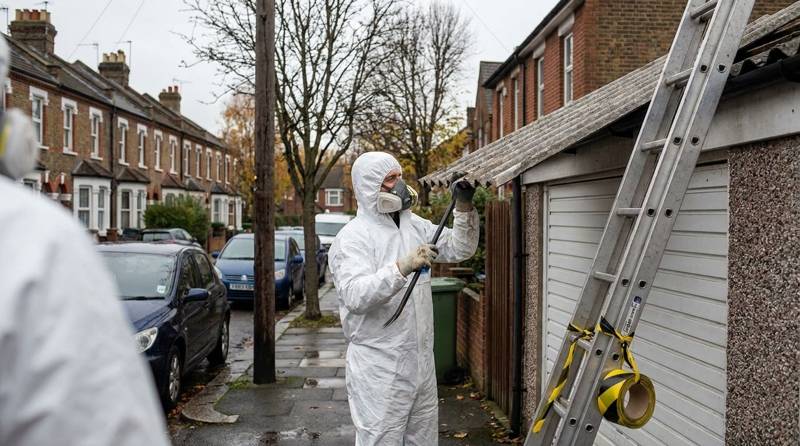
Asbestos was used widely in UK homes built or extended before the year 2000, most commonly in garage and shed roofs, artex ceiling coatings, older floor tiles, and soffits and guttering. Finding it during a renovation or a house sale is common, and it is rarely as expensive or alarming to deal with as people fear, provided the right process is followed and the material is correctly identified first.
This guide sets out real 2026 UK prices for asbestos surveys and removal, explains the difference between licensed and unlicensed work, and covers the materials most likely to turn up in an ordinary home.
Asbestos Removal Cost by Material
Cost depends heavily on which material is present and how much of it needs removing, since some jobs need only basic precautions while others legally require a licensed contractor and formal air monitoring.
| Material / Job | Typical Cost |
|---|---|
| Single garage asbestos cement roof | £600 to £1,200 |
| Double garage or larger roof | £1,000 to £1,800 |
| Artex ceiling, per room | £300 to £800 |
| Asbestos floor tiles, per room | £400 to £900 |
| Soffits and guttering, per property | £300 to £700 |
| Garden shed roof | £350 to £700 |
| Water tank or cold water cistern | £200 to £450 |
| Licensed removal, sprayed coatings or lagging | £3,000 to £8,000 |
These prices typically include safe removal, double-bagging, and disposal at a licensed hazardous waste site, but always confirm exactly what is covered before booking, since some cheaper quotes exclude disposal as a separate line item.
Licensed vs Unlicensed Removal
Whether a job legally needs a licensed contractor depends on the type of asbestos and how easily it releases fibres when disturbed, not simply how much of it there is.
- Non-licensable work: Asbestos cement (most garage roofs, soffits, gutters, some old flue pipes) and other bonded, low-risk materials can be removed by a competent contractor following the correct wetting, bagging and disposal procedure, without needing an HSE licence.
- Notifiable non-licensed work: Some materials, including many artex coatings and floor tiles, sit in a middle category requiring notification to the relevant enforcing authority and medical record keeping, though still not a full licence.
- Licensable work: Sprayed asbestos coatings, pipe lagging, and asbestos insulation board in poor condition are classed as higher risk and legally require an HSE-licensed contractor, typically with sealed enclosures and air monitoring.
A proper survey will state clearly which category applies, and a reputable contractor will not proceed with licensable work without the correct licence, whatever a cheaper quote might suggest.
Asbestos Surveys
Before any removal, a survey identifies exactly what is present and how much risk it carries.
| Survey Type | Typical Cost |
|---|---|
| Management survey, typical 3 bed house | £150 to £350 |
| Refurbishment or demolition survey | £250 to £600 |
| Single sample lab test (suspected material) | £30 to £80 |
A management survey is the right starting point for most homeowners simply wanting to know what is in the property. A refurbishment or demolition survey is more thorough and is a legal requirement before any building work that could disturb the fabric of the property, such as removing a garage roof or stripping a ceiling.
What Affects the Cost
- Access: A roof needing scaffolding or a tower rather than a straightforward ladder adds £150 to £400.
- Condition: Damaged, crumbling or previously disturbed material takes longer and more careful handling to remove safely than intact material.
- Quantity and area: Larger roofs, multiple rooms of artex, or several outbuildings scale the cost roughly linearly, though many contractors offer a discount for combined jobs on the same visit.
- Disposal distance: Rural properties further from a licensed hazardous waste site sometimes carry a small transport surcharge.
- Notification and paperwork: Notifiable non-licensed work involves formal record keeping the contractor must factor into their time, reflected in a slightly higher rate than pure asbestos cement removal.
Common Materials Found in UK Homes
Properties built or extended before 2000 are the most likely to contain asbestos, with a hard cut-off in 1999 when its use was banned outright in the UK.
- Garage and shed roofs: Grey corrugated asbestos cement sheeting is extremely common on garages built before the early 2000s.
- Artex ceilings and walls: Textured coatings applied before the early 1980s often contain low levels of chrysotile asbestos, though not all textured coatings do.
- Floor tiles: Vinyl floor tiles from the 1950s to 1980s, particularly darker coloured ones, commonly contained asbestos in the backing.
- Soffits, fascias and guttering: Asbestos cement was a standard material for these until the 1980s and sometimes later.
- Pipe lagging and boiler insulation: Older heating systems, particularly pre-1980s, may have asbestos lagging around pipework, generally higher risk than cement products.
If a renovation is uncovering older materials, it is worth reading alongside our guide to loft conversion costs, since roof spaces are one of the most common places asbestos containing boards turn up unexpectedly.
Ways to Reduce the Cost
- Get a survey before assuming the worst. Not every older material contains asbestos, and a management survey for £150 to £350 can rule materials out before paying for unnecessary removal.
- Combine jobs where possible. Removing a garage roof and disposing of an old shed on the same contractor visit is usually cheaper than two separate call-outs.
- Check for council disposal support. Some local authorities accept small domestic quantities of asbestos cement at a household waste site free or at reduced cost, worth checking before booking a full private removal for a very small job.
- Get at least three quotes. Asbestos removal pricing varies significantly by region and contractor, and a written itemised quote helps confirm disposal is included, not charged separately later.
- Do not attempt to remove or drill into suspected material yourself. Disturbing asbestos incorrectly is the single biggest cause of unnecessary exposure risk, and a failed DIY attempt often costs more to remediate afterwards than professional removal would have cost from the outset.
Asbestos removal in the UK typically costs £600 to £2,500 for a standard domestic job such as a garage roof or a room of artex, rising to £3,000 to £8,000 for licensed removal of higher risk materials. Get a survey first, confirm whether the job is licensable, and get at least three itemised quotes that clearly state whether disposal is included.