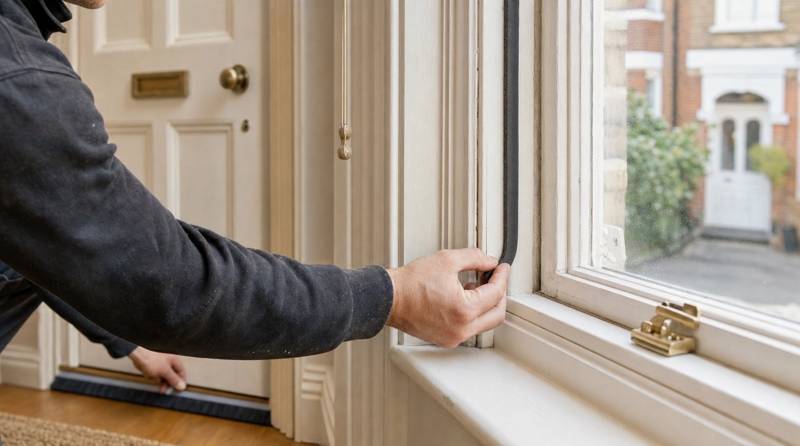
Draught proofing is the process of sealing gaps around doors, windows, floors, and chimneys to stop cold air entering and warm air escaping. For a typical 3-bedroom UK house, professional draught proofing costs £200 to £500 and DIY materials cost £100 to £200 for the whole house. It is one of the highest-return energy saving improvements you can make, with payback periods of 1 to 4 years depending on your approach.
This guide covers every draught proofing method, what each costs, and whether you should hire a professional or do it yourself. For other home improvement costs, see our full range of cost guides.
Draught Proofing Costs at a Glance
| Job | DIY Cost | Professional Cost | Payback Period |
|---|---|---|---|
| External door (brush strip + seal) | £5 to £25 | £30 to £100 | 1 to 2 years |
| Internal doors (foam tape) | £3 to £10 each | £20 to £50 each | 1 to 3 years |
| Sash windows (full strip) | £15 to £40 each | £50 to £120 each | 3 to 8 years |
| Casement windows (foam tape) | £3 to £8 each | £20 to £60 each | 1 to 3 years |
| Suspended timber floors | £30 to £80 | £150 to £400 | 2 to 5 years |
| Chimney balloon (unused fireplace) | £20 to £30 each | £50 to £100 each | 0.5 to 1 year |
| Letterbox brush seal | £5 to £15 | £20 to £40 | 1 to 2 years |
| Full house (professional) | £100 to £200 | £200 to £500 | 3 to 10 years |
Door Draught Proofing
External doors are the biggest single source of draughts in most UK homes. Cold air gets in through four places: the bottom gap (under the door), the letterbox, the keyhole, and the frame seal. Each of these has a specific fix.
A door brush strip fitted to the bottom of an external door is the most effective single draught proofing measure you can do. It eliminates the cold air that flows under the door when the wind picks up. A good quality brush strip costs £5 to £20 from a DIY store and takes 20 minutes to fit. A professional fitting the same strip charges £30 to £100 depending on whether any door adjustment is needed.
The door frame seal (the gap between the door and its frame) is addressed with compressible foam tape or rubber seal strip. This costs £3 to £10 in materials and lasts 3 to 5 years before the foam compresses and needs replacing. Rubber and silicone seals last longer, around 5 to 10 years, and cost £8 to £20.
A letterbox brush costs £5 to £15 and eliminates one of the most overlooked draughts in older UK properties. A keyhole cover costs £2 to £5 and takes two minutes to fit. Both are worth doing alongside any door draught proofing work.
Window Draught Proofing
| Window Type | Draught Source | DIY Fix | DIY Cost |
|---|---|---|---|
| Sash windows (original timber) | Around sashes and pulleys | Brush pile seal kit | £15 to £40 |
| Casement windows (timber or uPVC) | Around frame seal | Foam or rubber seal tape | £3 to £8 |
| Fixed frames (any) | Cracked putty or silicone | Silicone sealant | £5 to £12 |
| uPVC (seal failure) | Perished rubber seal | Replacement rubber seal strip | £8 to £20 |
Sash windows in older UK properties are the most draughty window type and the hardest to seal properly. The original rope-and-pulley mechanism creates gaps around the sash frame that standard foam tape cannot address. A brush pile seal kit, which slides into a groove around the sash, costs £15 to £40 per window and is the correct solution. A professional fitting the same kit charges £50 to £120 per window.
Modern uPVC casement windows are much less draughty but can develop gaps as the rubber seal in the frame perishes. Replacement seal strip costs £8 to £20 and is a straightforward DIY job. If the draughts are coming from the fixed frame rather than the opening sash, the outer silicone bead may need reapplying, which costs £5 to £12 in materials.
Floor Draught Proofing
Suspended timber floors over cold sub-floor voids are a major source of heat loss in pre-1930s UK properties. Cold air rises through gaps between floorboards and around the edges of the floor. This is often not noticed because the cold air is diffuse rather than feeling like a concentrated draught, but it can account for 10 to 15% of heat loss in an older property.
The main options for floor draught proofing are:
- Fillers for gaps between boards: Papier-mache filler (newspaper mixed with wallpaper paste) is the traditional solution. It costs almost nothing and is flexible enough to move with the boards. Wooden beading is a more permanent fix, cut to fill each gap and secured with wood glue. Neither option is quick for a large room.
- Skirting board sealant: The gap between the bottom of the skirting board and the floor is often overlooked. Silicone sealant applied along this join stops a significant amount of cold air at low cost.
- Fitting floorboard insulation: For the most draughty suspended floors, injecting rigid insulation or laying mineral wool between the joists from below (via the sub-floor void or by lifting boards) is the most effective long-term solution. This is usually done as part of a professional draught proofing or insulation job and costs £150 to £400 depending on access.
Chimney and Fireplace Draught Proofing
An unused fireplace with an open chimney loses as much heat as leaving a window open all year. A chimney balloon is an inflatable plug that sits just inside the chimney above the fireplace, blocking the cold downdraught completely. It costs £20 to £30 per fireplace and is one of the fastest-payback draught proofing measures available.
A chimney balloon is removed in seconds if you want to light a fire. There is a pull tab at the front that deflates and removes the balloon. It is essential to remove the balloon before lighting a fire, so position the pull tab visibly. Most come with a reminder tag that hangs into the fireplace opening.
For working fireplaces, a draught excluder cowl fitted to the top of the chimney pot reduces downdraughts while still allowing the flue to draw when the fire is lit. A cowl costs £30 to £80 and is fitted from outside by a chimney sweep or roofer at a cost of £50 to £150 including labour.
Useful Products for This Project
Free Draught Proofing via ECO4
The ECO4 scheme (Energy Company Obligation 4) funds free draught proofing, insulation, and energy efficiency improvements for eligible households in England, Scotland, and Wales. Eligibility is based on receiving qualifying benefits (Universal Credit, Housing Benefit, Pension Credit, and others) or living in a property with an EPC rating of D or below with a low household income.
To check eligibility, contact your energy supplier directly or use the government's Simple Energy Advice service. Your local council may also run its own free home insulation scheme. It is always worth asking before paying for draught proofing work if you are on a low income or benefits.
Some councils offer free energy efficiency surveys that identify all the draught sources in your home and recommend the highest priority fixes. These surveys are carried out by accredited assessors and cost nothing for qualifying households.
DIY vs Professional Draught Proofing
| Factor | DIY | Professional |
|---|---|---|
| Total cost (3-bed house) | £100 to £200 | £200 to £500 |
| Time required | 1 to 2 days | 4 to 8 hours |
| Quality of finish | Variable | Consistent |
| Sash window specialist sealing | Possible with kit | Recommended |
| Subsurface floor draughts | Difficult | Professional only |
| Payback period | 1 to 4 years | 5 to 10 years |
For most standard UK homes, DIY draught proofing using foam tape, brush strips, and chimney balloons is entirely achievable and gives the fastest payback. The materials are simple to fit and cost a fraction of a professional job.
A professional is worth hiring for sash windows in older properties, sub-floor draughts (where access under the floor is needed), and if you want a comprehensive whole-house survey to identify sources you may have missed. Professional draught proofers also use longer-lasting materials and give guarantees on their work.
How Much Can Draught Proofing Save?
The Energy Saving Trust estimates that a typical semi-detached house saves £45 to £65 per year on energy bills through draught proofing. Detached houses save more, around £65 to £100 per year, because there is more external surface area. A mid-terrace saves somewhat less, around £25 to £45 per year, because the party walls share heat with neighbours.
The biggest single saving comes from an unused fireplace. A chimney balloon on an open fireplace can save £50 to £150 per year on its own, depending on how exposed the chimney is. If you have two or three unused fireplaces, fitting chimney balloons pays back in a single heating season. You can read more about keeping heating costs down on Startup Costs if you are also managing business premises.
Draught proofing a typical 3-bedroom UK house costs £100 to £200 in DIY materials or £200 to £500 for a professional job. The payback period is 1 to 4 years for DIY and 5 to 10 years for professional work. Start with external doors, chimney balloons for unused fireplaces, and foam tape on window frames. These three measures deliver most of the saving for the least cost. Check ECO4 eligibility before spending anything if you are on qualifying benefits. Also see our guide on boiler costs if you are planning a full heating overhaul.
Frequently Asked Questions
How much does draught proofing cost in the UK?
Professional draught proofing for a typical 3-bedroom house costs £200 to £500. DIY materials for the whole house cost £100 to £200. Individual jobs cost £30 to £100 per door and £20 to £60 per window for a professional, or £5 to £25 per door in materials for DIY.
How much does professional draught proofing cost?
A professional draught proofer charges £200 to £500 for a 3-bedroom house covering doors, windows, skirting boards, and floors. Individual door treatment costs £30 to £100. Window sealing costs £20 to £60 per window. Chimney balloon installation costs £50 to £100 per fireplace including labour.
Is draught proofing worth the money?
Yes. The Energy Saving Trust estimates savings of £45 to £65 per year for a typical semi-detached house. DIY materials pay back in 2 to 4 years. Professional work pays back in 5 to 10 years. Chimney balloons on unused fireplaces often pay back within one heating season.
Can I get free draught proofing?
Yes, if you are on qualifying benefits or have a low income. The ECO4 scheme funds free draught proofing and insulation improvements. Contact your energy supplier or local council to check eligibility. Some local authorities run their own free insulation schemes independent of ECO4.
What is the cheapest way to draught proof a house?
Self-adhesive foam tape costs £3 to £8 per roll and seals most window and door frame gaps. A door brush strip costs £5 to £20 and eliminates the cold air under external doors. A chimney balloon costs £20 to £30 and blocks an entire fireplace draught. Together these three measures cover most of a typical house for under £60.
How long does draught proofing last?
Foam tape lasts 3 to 5 years before losing effectiveness. Brush strips last 5 to 10 years. Silicone sealant around fixed frames lasts 10 to 20 years. Professional-quality rubber seals and brush pile strips installed correctly last 10 years before needing attention.