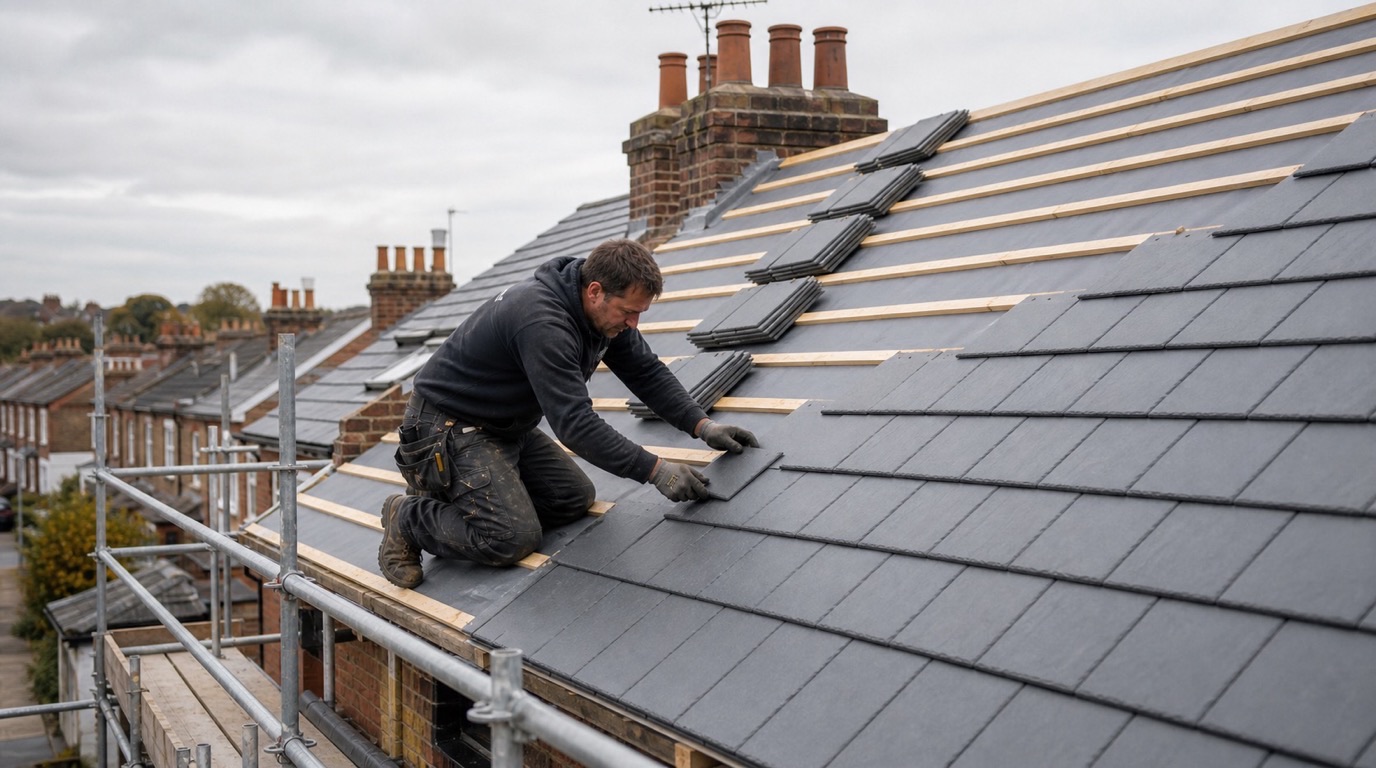
A new roof is one of the largest single home improvement costs a UK homeowner will face, typically running from £5,000 to £14,000 for a standard 3-bedroom house depending on materials and roof complexity. The type of tile or covering you choose and the condition of the underlying structure are the two biggest price drivers.
This guide covers every common roof type, realistic installed costs, what affects the price, and how to avoid paying over the odds. For other major home costs, see our full range of cost guides.
- Full re-roof on a 3-bed semi: £5,000 to £12,000
- Concrete tile roof (standard): £5,000 to £8,000
- Natural slate roof: £8,000 to £20,000
- Flat roof replacement (garage): £800 to £3,500
- Scaffold (if separate): £700 to £1,500
- Partial re-roof or repair: £300 to £2,500
New Roof Costs at a Glance
| Roof Type | 3-Bed Semi | 3-Bed Detached | Per m² |
|---|---|---|---|
| Concrete interlocking tiles | £5,000 to £8,000 | £7,000 to £12,000 | £45 to £70 |
| Clay plain tiles | £6,000 to £10,000 | £8,500 to £15,000 | £60 to £90 |
| Natural slate (Welsh) | £9,000 to £16,000 | £12,000 to £22,000 | £65 to £95 |
| Natural slate (Spanish/Brazilian) | £7,500 to £13,000 | £10,000 to £18,000 | £50 to £75 |
| Artificial slate tiles | £5,500 to £9,000 | £7,500 to £13,000 | £35 to £55 |
| Flat roof (EPDM rubber) | £1,500 to £4,500 (extension/garage) | £50 to £90 | |
| Flat roof (GRP fibreglass) | £1,800 to £5,000 (extension/garage) | £60 to £100 | |
All prices above include labour, materials, waste disposal, and scaffold where needed. They assume the timber structure (rafters and purlins) is in sound condition. If structural repairs are needed, add £500 to £3,000 depending on the extent of the damage.
Concrete Tile Roofs
Concrete interlocking tiles are the most common choice for UK roof replacements. They are durable, widely available, and relatively quick to lay compared to plain tiles or slate. A standard concrete tile roof on a 3-bedroom semi costs £5,000 to £8,000 fully installed including scaffold.
Concrete tiles have a lifespan of 30 to 50 years. They are heavier than clay or slate but most UK homes have roof structures designed to handle the load. They are not suitable for all properties, particularly older homes with lighter roof structures, so always have a surveyor check load-bearing capacity before specifying heavy concrete tiles on an older building.
Clay Tile Roofs
Clay tiles cost more than concrete but last significantly longer, with a lifespan of 60 to 100 years on a well maintained roof. They are the traditional choice for period properties and conservation areas where planners often require traditional materials. Clay plain tiles are the most labour intensive to lay because they overlap individually rather than interlocking, which drives up the installation cost.
A clay tile roof on a 3-bedroom semi costs £6,000 to £10,000. For a larger detached house, expect £8,500 to £15,000. The premium over concrete tiles reflects both the higher material cost and the additional labour time. Over a 60-year lifespan, the cost per year is comparable to or less than concrete tiles if you factor in the reduced replacement frequency.
Natural Slate Roofs
Natural slate is the premium roofing material for UK homes and the material of choice for period properties, listed buildings, and any home where long-term aesthetics and longevity matter. A properly laid natural slate roof lasts 80 to 150 years, making it genuinely the last roof most homeowners will ever need.
| Slate Origin | Material Cost (m²) | Installed Cost (m²) | Expected Lifespan |
|---|---|---|---|
| Welsh (Penrhyn, Ffestiniog) | £35 to £55 | £65 to £95 | 100 to 150 years |
| Spanish (Cupa, Galician) | £20 to £35 | £50 to £75 | 50 to 80 years |
| Brazilian (Verde Pizarra) | £18 to £30 | £45 to £70 | 40 to 70 years |
| Artificial/reconstituted slate | £12 to £22 | £35 to £55 | 30 to 50 years |
Welsh slate commands a significant premium because the quarries are limited, the material quality is outstanding, and it is the historic choice for British roofs. If you are re-roofing a period property or a listed building, the local planning authority may specifically require natural Welsh or local slate. Check before specifying imported materials.
Flat Roof Replacements
Flat roofs cover garages, extensions, and some bungalows. Modern flat roofing materials are far more reliable than the old felt systems of the 1970s and 1980s. The three main options are EPDM rubber, GRP fibreglass, and TPO membranes.
| System | Cost per m² | 20m² Garage | Lifespan |
|---|---|---|---|
| EPDM rubber | £50 to £90 | £1,500 to £2,800 | 30 to 50 years |
| GRP fibreglass | £60 to £100 | £1,800 to £3,200 | 25 to 40 years |
| TPO membrane | £55 to £85 | £1,600 to £2,600 | 20 to 30 years |
| Mineral felt (budget) | £25 to £45 | £700 to £1,400 | 10 to 20 years |
EPDM rubber and GRP fibreglass are the preferred choices for new flat roofs because they carry long guarantees (20 to 25 years from most reputable contractors) and are far more resistant to ponding water and UV degradation than felt. Mineral felt is still used but is only worth specifying if budget is the primary constraint.
What Affects the Price of a New Roof
- Roof size and pitch: A larger roof uses more materials and takes more labour hours. A steeper pitch is harder and slower to work on safely, increasing labour costs by 10 to 25%.
- Materials: Natural Welsh slate costs three to four times more per square metre than concrete interlocking tiles. This is the biggest single driver of the total cost.
- Structural condition: If the battens, felt, rafters, or purlins need replacing, add £500 to £3,000 to the base quote. Most roofers will not know the full extent of structural work needed until the old tiles are stripped.
- Scaffold: Most re-roofs require scaffold. If a roofer offers to work without it on a two-storey house, treat this as a red flag. Proper scaffold costs £700 to £1,500 and protects both the workers and your property.
- Chimney and flashings: Lead flashings around chimneys, skylights, and valleys add £300 to £1,500 depending on the number and complexity. Chimney repointing or repair adds a further £300 to £800.
- Location: Labour costs in London and the South East run 20 to 40% higher than in the North of England, Scotland, and Wales.
- Access: Difficult access due to neighbouring properties, trees, or a narrow garden can add to scaffold costs and slow the job down.
Partial Re-Roof and Repair Costs
Not all roof work requires a full replacement. If only part of the roof is damaged or failing, a partial re-roof is far more cost effective.
| Repair Type | Typical Cost |
|---|---|
| Single tile replacement (1-5 tiles) | £150 to £350 |
| Ridge tile repointing/resealing | £300 to £800 |
| Flashing repair (chimney or valley) | £200 to £600 |
| Partial re-roof (one slope, 25m²) | £1,500 to £3,500 |
| Roof felt replacement only | £800 to £2,000 |
| Flat roof patch repair | £150 to £500 |
Partial re-roofs make sense when the damage is contained to one section and the rest of the roof is in sound condition. A surveyor or experienced roofer can tell you whether the rest of the roof is likely to need replacement within the next 5 to 10 years. If the answer is yes, it is usually better value to do the full job now while scaffold is already up.
Useful Products for This Project
Sylglas Aluminium Flashing Tape 10m Roll
Self-adhesive flashing tape is the most common DIY roof repair material. A roll covers common leak points around chimneys and skylights and costs a fraction of professional sealing.
View on Amazon →How to Get the Best Price on a New Roof
- Get three or more quotes. Roofing prices vary widely between contractors. Three quotes on the same spec gives you a clear picture of the market rate and flags outliers in both directions.
- Use NFRC-registered contractors. The National Federation of Roofing Contractors runs a vetted membership scheme. NFRC members carry proper insurance and adhere to industry standards. Avoid any roofer who approaches you unsolicited at your door.
- Do not pay a large deposit. A reasonable deposit is 10% to 25% before work starts. Paying more than that before scaffold goes up is unusual and carries risk if the contractor fails to complete the job.
- Ask what is included. Confirm whether scaffold, waste disposal, flashing repairs, and ridge tiles are included in the quote. Ambiguous quotes make comparison impossible and invite disputes at invoice stage.
- Time your project. Roofers are busiest from spring to autumn. Winter is slower and many contractors offer better rates between November and February if weather permits.
- Check VAT. Roofing work on existing dwellings is subject to 20% VAT. Some contractors quote excluding VAT. Make sure you are comparing like for like.
- Consider energy efficiency upgrades at the same time. If the roof is coming off anyway, adding roof insulation between and over the rafters costs far less than doing it as a separate job. Check the Boiler Upgrade Scheme and ECO4 funding for eligible properties. You can read more about heating costs on Startup Costs.
Does My Insurance Cover a New Roof?
Home buildings insurance typically covers storm damage and sudden, unexpected events that damage the roof. It does not cover gradual wear and tear, age-related deterioration, or maintenance failures. If a tree falls on your roof, insurance will almost certainly apply. If the roof has simply worn out after 30 years, it will not.
Always report suspected storm damage promptly. Insurance claims are more straightforward when reported within a few days of the event. If you are unsure whether the damage is insurable, get a roofer to assess it and document what they find in writing before you contact your insurer.
A new roof on a 3-bedroom house costs £5,000 to £12,000 for concrete or clay tiles and £8,000 to £20,000 for natural slate. Get three quotes from NFRC members, confirm scaffold and waste disposal are included, and do not pay a large deposit before work starts. If you have had recent storm damage, check your buildings insurance before paying out of pocket. Also see our guide on loft conversion costs if you are thinking about improving your home while the scaffold is up.
Frequently Asked Questions
How much does a new roof cost in the UK in 2026?
A full roof replacement on a typical 3-bedroom semi-detached house costs £5,000 to £12,000. The price varies depending on roof size, materials chosen, and whether the battens and felt need replacing. Slate and clay tile roofs cost more than concrete tiles or felt flat roofs.
How much does a flat roof replacement cost?
A flat roof replacement costs £800 to £3,500 for a typical garage or extension. EPDM rubber roofing costs £1,500 to £3,000 for a 20 square metre area. GRP fibreglass costs £1,800 to £4,000 for the same area. Modern flat roof systems carry 20 to 25 year guarantees and are far more reliable than old mineral felt.
How much does a slate roof cost?
A new natural slate roof costs £8,000 to £20,000 for a typical semi-detached house. Natural Welsh slate costs £65 to £95 per square metre installed. Spanish and Brazilian slate costs £50 to £75 per square metre. Artificial slate tiles cost £35 to £55 per square metre but last around half as long as natural slate.
How long does a roof replacement take?
A standard re-roof on a 3-bedroom house takes 2 to 4 days for the actual roofing work. Complex roofs with steep pitches, chimneys, or full structural replacement take 5 to 7 days. Scaffold erection adds roughly a day at each end. Most roofers book 1 to 3 weeks ahead, so total project time is usually 3 to 6 weeks from quote to completion.
Do I need planning permission for a new roof?
Replacing a roof like-for-like does not usually require planning permission under permitted development rights in England. You do need permission if you are in a conservation area, if the property is listed, or if the new roof would change the height or shape of the building. Always check with your local planning authority if you are in a designated area.
How much does scaffold cost for a roof replacement?
Scaffold for a standard semi-detached house costs £700 to £1,500 for a 2 to 4 week hire. Full scaffold around all sides costs £1,200 to £2,500. Some roofers include scaffold in their quotes; others charge it separately. Always confirm what is included before comparing quotes from different contractors.